Have you seen a Celtic sea slug before?
Also know as the licorice seaslug, Onchidella celtica is a tiny black (sometimes greyish) sea slug that grows to a maximum size of 2cm and can be found grazing on the mid to upper shore. If you haven't seen one you are in good company, most people haven't heard of them and although they are common in some places around Cornwall many local marine biologists haven't even seen one!
What makes them special?
They are very rare - only being found in a handful of locations in the UK. On Cornwall's North coast they can be found in large numbers between Holywell bay and Hartland point (we saw lots on the honeycomb worm reefs at Northcott mouth and at Polzeath see the previous blog entries!). But on the south Coast they are found only rare small colonies spread out along the coast. This summer I was lucky to see them for my first time ever on the south coast. On our Shoresearch survey of Fowey's Readymoney cove we were joined by Sarah Matthews. Sarah is the daughter of Gillian Matthews who was a well known naturalist who studied Chitons and other molluscs. Gillian spent hundreds of hours searching the coves and rocks around her home town of Fowey looking for the Celtic sea slug and eventually found a colony living on the north face of an upstanding rock near Readymoney cove. The strange thing is she was unable to find them living anywhere else in the area but on this one rock there lived a colony numbering tens, possibly more.
Gillian sadly died many years ago but the secret of the Fowey Celtic Sea slug hotel was passed down to Sarah and on our Shoresearch at Fowey we were privileged to be shown the exact spot and .. sure enough saw over 30 of these small but awesome sea slugs! They haven't been recorded here since the 1980's but they were still there, happily grazing the rocks and enjoying the shade the north face of the rock provides.
Unlike to normal sea slugs which have gills - Celtic sea slugs are actually pulmonate gastropods related to land slugs and snails. instead of gills they have a lung that means they are much happier out of water breathing air. when the tide falls they leave their crevices and feed on tiny algae plants growing on the rocks which they scrape off with their rasp like radula. They will only be out and about for a limited time as on a hot day they run the risk of being dried out so en mass they will suddenly all disappear back into small crevices to hide.
When the tide comes back in these tiny warty skinned land lubbers stay in their bolt holes away from predators and wait for the tide to fall again. During this time they obviously cant use their lungs so it is most likely they are absorbing oxygen through their skin.
They really are cool little guys and I felt really privileged to have seen their Fowey home!
 |
| Sarah and the Sea slug hotel! Location secret! |
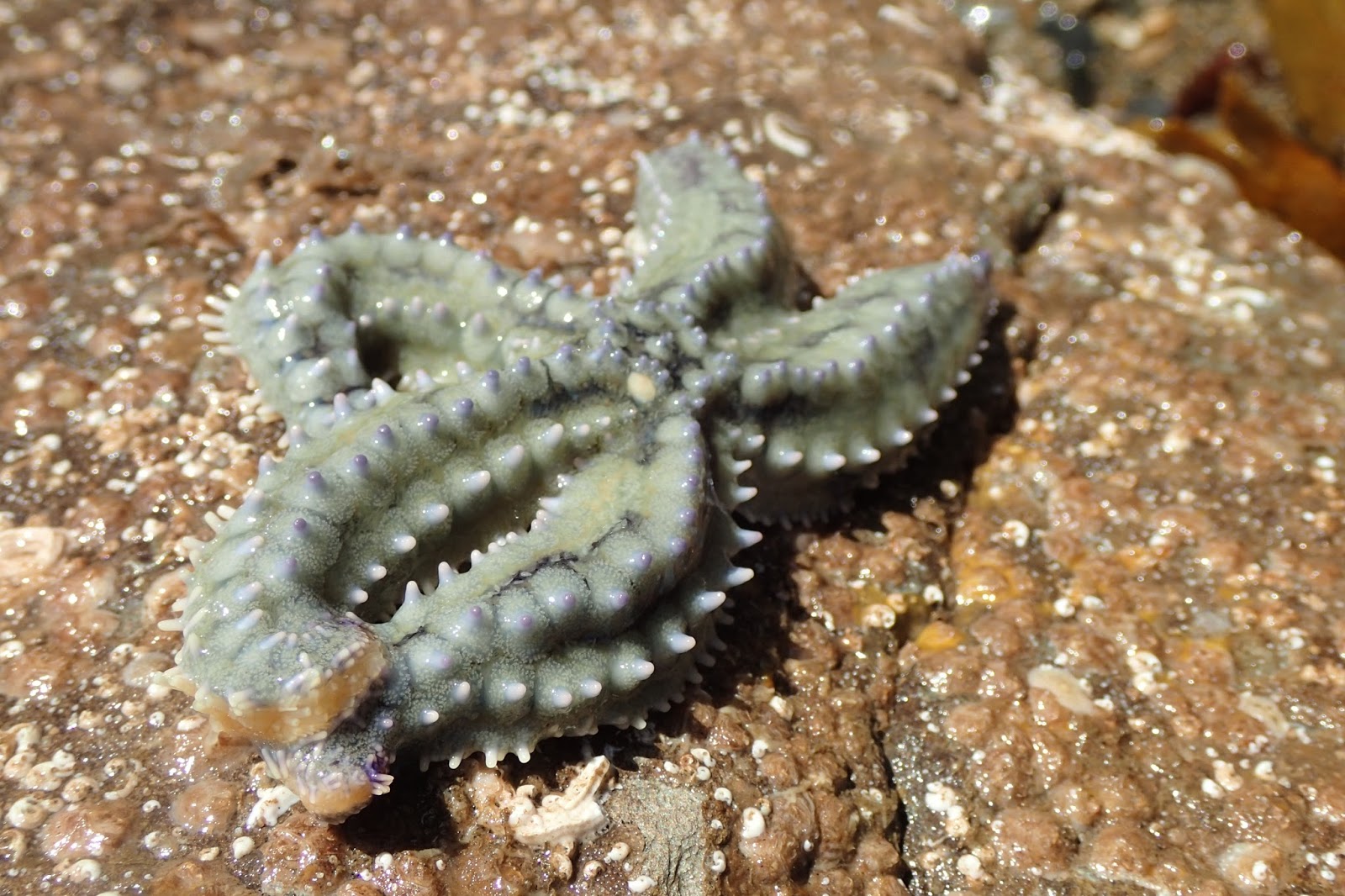
We also had a fantastic Shoresearch - Readymoney was teeming with life! There were lots of common sea stars under every rock, and as always we were amazed by the quantity and diversity of life on this very special shore!
 |
| Leptostracean (hooded shrimp) a small crustacean that is very under recorded. there is alot of argument over the classification of this group so I can only go so far as to say its Nebalia spp. |
 |
| Common sea star |
 |
| Sally, Ryan and John carrying out a quadrat survey |
 |
| Lineatus ruber a nemertean worm - can you see the eye spots? |
 |
| A nice red sea weed that we had fun trying to identify - I think its Rhodomela cofervoides |
Thanks to all the volunteers but Shoresearch regulars and Friends of the Fowey Estuary who turned out and took part!
 |
| New recruits Nick and Jon with a Rissos Crab |
 |
| My favourite crab photo of the year so far Xantho pilipes , Rissos Crab |
 |
| Dynamene bidentata an isopod |